
Castles and Crusades represent a pivotal era, blending military architecture with religious fervor; exploring available “Castles and Crusades” PDF materials unlocks deeper understanding.
Historical Context: The Medieval Period
The Medieval Period, spanning roughly from the 5th to the 15th centuries, forms the crucial backdrop for understanding both castles and the Crusades. This era, following the decline of the Roman Empire, was characterized by decentralized political power, feudalism, and the significant influence of the Catholic Church. The need for fortified structures – castles – arose directly from the fragmented political landscape and constant localized conflicts among lords and kingdoms.
Simultaneously, the religious zeal of the time, coupled with political ambitions, fueled the Crusades, a series of religious wars sanctioned by the Latin Church in the medieval period. Accessing resources like “Castles and Crusades” PDF documents reveals how these two elements – the need for defense and the drive for religious expansion – were inextricably linked. Studying this period necessitates understanding the societal structures, religious beliefs, and political dynamics that shaped the construction of castles and motivated participation in the Crusades.
The Intertwined Nature of Castles and Crusades
Castles and Crusades weren’t isolated phenomena; they existed in a symbiotic relationship, profoundly influencing each other. The Crusades created a demand for fortifications in the Holy Land, leading to the development of new castle designs adapted to Eastern climates and siege warfare techniques. Conversely, the experience gained in building and defending castles during the Crusades was then brought back to Europe, revolutionizing European castle architecture.
Examining “Castles and Crusades” PDF resources highlights how the logistical challenges of maintaining Crusader states necessitated robust castle networks. These castles served as both military strongholds and administrative centers. The wealth generated from Crusader lands also funded castle construction in Europe. The military orders, like the Knights Templar and Hospitaller, played a key role in both castle building and Crusader campaigns, further solidifying this connection. Understanding this interplay is vital for a comprehensive grasp of the period.
The Rise of Castles
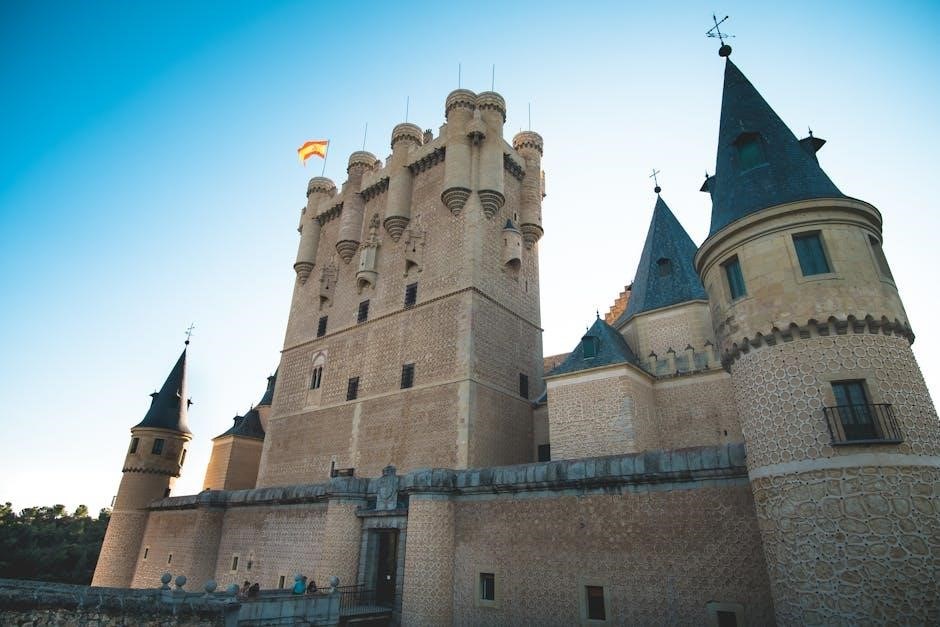
Castles evolved from simple earthworks to complex stone structures, detailed in “Castles and Crusades” PDF guides, becoming central to medieval defense and power.
Early Motte-and-Bailey Castles
Early motte-and-bailey castles, the first Norman fortifications in England and elsewhere, represent a rapid response to the need for control following conquest. These structures, thoroughly documented in numerous “Castles and Crusades” PDF resources, were remarkably efficient and quickly constructed. A motte was an artificial mound of earth, often topped with a wooden or stone keep, providing a strategic vantage point. Surrounding the motte was a bailey – an enclosed courtyard – typically protected by a palisade and ditch;
The simplicity of their design allowed for swift erection, crucial for establishing dominance over newly acquired territories. While not as formidable as later stone castles, they offered substantial defensive capabilities against the prevalent threats of the time. Detailed diagrams and historical analyses within “Castles and Crusades” PDF materials illustrate the evolution from these basic fortifications to more sophisticated designs. They served as administrative centers and symbols of Norman authority, effectively projecting power across the landscape.
Development of Stone Keep Castles
Stone keep castles emerged as a significant advancement over earlier motte-and-bailey designs, offering enhanced durability and defensive capabilities. Detailed analyses within “Castles and Crusades” PDF documents reveal a shift towards permanent, robust structures. The keep, a large, strong tower, became the central defensive element, providing a final refuge if the outer walls were breached. These keeps were often square or rectangular, maximizing internal space and offering commanding views.
Construction involved substantial investment and skilled labor, reflecting the growing wealth and power of feudal lords. The transition from wood to stone, thoroughly illustrated in “Castles and Crusades” PDF resources, wasn’t immediate; many castles began as timber structures gradually replaced with stone. Stone keeps provided better protection against siege weaponry and fire, becoming increasingly prevalent throughout the 12th and 13th centuries; They represented a clear statement of authority and a commitment to long-term control.
Concentric Castles: A Peak in Defensive Design
Concentric castles represent the pinnacle of medieval fortification, employing multiple layers of defensive walls to create an incredibly resilient structure. Examining “Castles and Crusades” PDF materials highlights how these castles, popularized during the Crusades, offered a significant advantage against attackers. The design featured inner and outer walls, each with its own towers and battlements, forcing attackers to overcome multiple obstacles.
This layered approach created deadly crossfire zones and made scaling the walls exceptionally difficult. Detailed diagrams within “Castles and Crusades” PDF resources demonstrate the strategic placement of defensive features. Krak des Chevaliers, frequently featured in such documents, exemplifies this design. Concentric castles were expensive to build and maintain, signifying immense power and resources. They became particularly important in the Holy Land, where constant warfare demanded the highest levels of defense.
Castle Life: Society Within the Walls
Castle life was a microcosm of medieval society, a self-contained world governed by strict hierarchies. Studying “Castles and Crusades” PDF documents reveals the complex social structure within these fortifications. At the apex was the lord and his family, enjoying relative comfort and privilege. Below them existed a garrison of soldiers, responsible for defense, and a multitude of servants catering to the castle’s needs.
These PDF resources detail daily routines, from meal preparation and textile production to weapon maintenance and guard duty. Castles weren’t merely military structures; they were bustling centers of economic activity. Provisions were crucial, requiring extensive storage and careful management. Life within the walls was often crowded and unsanitary, yet offered protection from external threats. Examining these details within “Castles and Crusades” PDF materials provides a vivid picture of medieval existence.
The Lord and His Family
“Castles and Crusades” PDF materials illuminate the privileged existence of the lord and his family within the castle walls. They occupied the most comfortable chambers, often including private apartments and a great hall for receiving guests and dispensing justice. The lord’s primary responsibilities involved administering his lands, leading troops in times of war, and upholding the law.
His family, including his wife and children, enjoyed a higher standard of living than most, though life was still far from luxurious by modern standards. PDF resources detail their involvement in managing the household, overseeing servants, and participating in social events. The lord’s lineage and status were paramount, influencing alliances and political power. Studying these “Castles and Crusades” PDF documents reveals the lord’s family as central to the castle’s social and political life.
The Garrison and Servants
“Castles and Crusades” PDF resources extensively cover the castle’s bustling workforce beyond the lord’s family. The garrison, comprised of knights, men-at-arms, and archers, formed the core of the castle’s defense, constantly training and maintaining weaponry. Their lives were regimented, focused on military preparedness and loyalty to the lord. Detailed within these PDF documents are the varying ranks and responsibilities within the garrison.
A vast number of servants supported daily castle life – cooks, blacksmiths, stable hands, and laundresses. These individuals provided essential services, ensuring the castle functioned smoothly. PDF analyses reveal a hierarchical structure among the servants, with skilled artisans enjoying higher status. Understanding the roles of both the garrison and servants, as outlined in “Castles and Crusades” materials, is crucial to comprehending the castle’s complex social structure.
Daily Life and Provisions
“Castles and Crusades” PDF materials vividly depict the routines within castle walls. Daily life revolved around the seasons, with activities dictated by agricultural cycles and the threat of attack. Meals were communal, often held in the great hall, and heavily reliant on locally sourced produce and preserved foods. These PDF resources detail the types of food consumed, from bread and ale to meat and vegetables, showcasing the challenges of maintaining a consistent food supply.
Provisions were meticulously managed, with storehouses stocked for sieges. Hunting supplemented the diet, while brewing and baking were essential skills. PDF analyses reveal the importance of water sources and sanitation, often rudimentary by modern standards. Understanding daily life and provisions, as presented in “Castles and Crusades” documents, offers insight into the practicalities of medieval existence and the resourcefulness required for survival.
The Crusades: A Religious and Political Movement
The Crusades, detailed in “Castles and Crusades” PDF resources, were driven by religious zeal and political ambition, reshaping medieval Europe and the Holy Land.
The Call to Crusade: Pope Urban II and the First Crusade
Pope Urban II’s compelling speech in 1095 at the Council of Clermont ignited the First Crusade, a pivotal moment extensively documented in various “Castles and Crusades” PDF materials. He appealed to both the religious and martial spirit of European nobility, framing the expedition as a holy war to reclaim the Holy Land from Muslim control.
The call resonated deeply, fueled by a desire to liberate Christian sites and offer opportunities for land and wealth. These PDF resources reveal the complex motivations behind participation, ranging from genuine piety to opportunistic ambition. The First Crusade, lasting from 1096 to 1099, witnessed a massive mobilization of forces, ultimately leading to the capture of Jerusalem and the establishment of Crusader states. Studying these events through detailed PDF analyses provides invaluable insight into the era’s religious fervor and political landscape.
Motivations for Participating in the Crusades
The motivations driving participation in the Crusades were remarkably diverse, a complexity thoroughly explored within comprehensive “Castles and Crusades” PDF documents. Religious zeal undoubtedly played a significant role, with many believing they were fulfilling a divine mandate to reclaim the Holy Land. However, economic and political factors were equally potent. Opportunities for land acquisition, plunder, and social advancement attracted knights and nobles seeking to improve their standing.
PDF analyses reveal that the promise of indulgences – remission of sins – also incentivized participation. Furthermore, the Crusades offered a release for the warrior class, channeling their martial skills outward rather than inward, preventing internal conflicts. Detailed PDF resources demonstrate how these interwoven motivations shaped the composition and trajectory of the Crusader armies, highlighting the multifaceted nature of this historical phenomenon.
The Major Crusades: A Timeline
A detailed timeline of the Crusades, readily available in extensive “Castles and Crusades” PDF resources, reveals a series of complex military and religious expeditions. The First Crusade (1096-1099) culminated in the capture of Jerusalem, establishing Crusader states. The Second Crusade (1147-1149), prompted by the fall of Edessa, proved largely unsuccessful.
The Third Crusade (1189-1192), featuring figures like Richard the Lionheart, aimed to recapture Jerusalem from Saladin, achieving limited gains. The Fourth Crusade (1202-1204) infamously deviated from its original goal, sacking Constantinople. PDF analyses illustrate that subsequent crusades, though numerous, lacked the scale and impact of these initial four. These PDF documents provide crucial context, detailing the political landscape and strategic objectives of each expedition, offering a comprehensive overview of this turbulent period.
The First Crusade (1096-1099)
The First Crusade, meticulously documented in numerous “Castles and Crusades” PDF materials, began with Pope Urban II’s call to arms in 1095. Driven by religious zeal and promises of land, a diverse army embarked on a perilous journey to the Holy Land. Initial phases involved disorganized “People’s Crusades,” quickly decimated by local forces.
The main Crusader army, comprised of knights from across Europe, achieved significant victories, capturing Antioch after a brutal siege. Ultimately, Jerusalem fell in 1099, resulting in a massacre of the city’s Muslim and Jewish inhabitants. PDF analyses detail the establishment of Crusader states – the Kingdom of Jerusalem, County of Tripoli, Principality of Antioch, and County of Edessa – marking a pivotal moment. These PDF resources offer detailed accounts of battles, leadership, and the lasting impact of this initial, successful Crusade.
The Second Crusade (1147-1149)
Triggered by the fall of Edessa to Zengi in 1144, the Second Crusade, extensively covered in available “Castles and Crusades” PDF documents, was a largely unsuccessful endeavor. Preached by Pope Eugene III and led by King Louis VII of France and Emperor Conrad III of Germany, it aimed to recapture Edessa and bolster the Crusader states. However, internal disputes and logistical challenges plagued the expedition.
The armies faced significant setbacks, including defeats at Dorylaeum against the Seljuk Turks. The siege of Damascus in 1148 ended in failure, largely due to disunity among the Crusader leaders. PDF analyses reveal that the Crusade highlighted the growing strength of Muslim forces and the fragility of Crusader holdings. Detailed maps within these PDF resources illustrate the campaign’s routes and the strategic importance of key castles and fortifications.
The Third Crusade (1189-1192)
Prompted by Saladin’s capture of Jerusalem in 1187, the Third Crusade – richly documented in numerous “Castles and Crusades” PDF materials – involved prominent European monarchs. Richard I of England, Philip II of France, and Holy Roman Emperor Frederick I Barbarossa led the charge, though Frederick drowned en route. This crusade is famed for its sieges and battles, particularly the siege of Acre, extensively detailed in historical PDF reports.
Richard the Lionheart’s military prowess led to victories at Arsuf and Jaffa, but he ultimately failed to recapture Jerusalem. The resulting Treaty of Ramla allowed Christian pilgrims access to the city. PDF analyses showcase the strategic importance of castles like Krak des Chevaliers during this period. These PDF resources also highlight the complex political landscape and the shifting power dynamics between Christian and Muslim forces.
The Fourth Crusade (1202-1204)
Diverging drastically from its original intent, the Fourth Crusade, thoroughly examined in available “Castles and Crusades” PDF documents, became infamous for its sack of Constantinople in 1204. Initially aimed at Egypt, the crusade was diverted due to Venetian influence and financial debts. Detailed PDF analyses reveal how the crusaders, unable to pay Venice for transport, were compelled to sack the Christian city of Zara.
The subsequent attack on Constantinople, a major center of trade and culture, resulted in widespread looting and destruction, documented extensively in historical PDFs. This event significantly weakened the Byzantine Empire and deepened the schism between Eastern and Western Christianity. PDF resources highlight the political maneuvering and internal conflicts that led to this disastrous outcome, showcasing a stark contrast to the ideals of earlier crusades.
Castles in the Crusader States
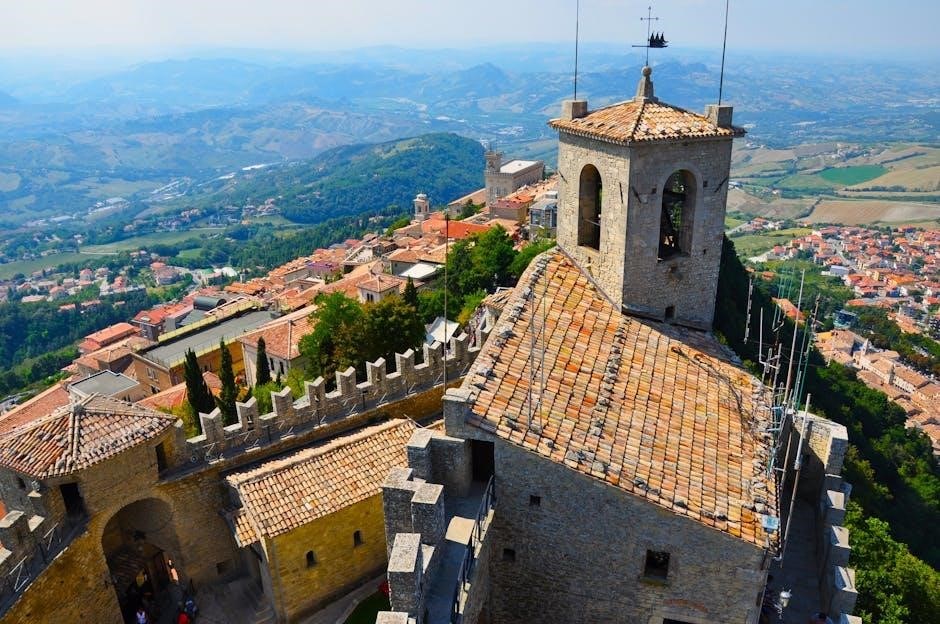
Castles within Crusader States, detailed in “Castles and Crusades” PDF resources, served as vital defensive strongholds and administrative centers in the Holy Land.
Crusader Castle Architecture in the Holy Land
Crusader castle architecture in the Holy Land uniquely blended European fortification traditions with Eastern influences, adapting to the region’s climate and strategic demands. Detailed analyses within “Castles and Crusades” PDF documents reveal a progression from simpler structures to highly sophisticated designs. Early Crusader castles often utilized existing fortifications, quickly adapting them for defensive purposes.
However, as Crusader presence solidified, new castles were constructed, showcasing innovative features like concentric walls – multiple layers of defense – and robust towers. These designs, thoroughly documented in scholarly PDFs, aimed to withstand prolonged sieges and counter local warfare tactics. The arid landscape necessitated efficient water management systems, often incorporated into castle designs. Furthermore, the use of local stone and construction techniques, explored in academic PDFs, demonstrates a pragmatic approach to building and maintaining these formidable structures. These castles weren’t merely military installations; they were symbols of Crusader power and resilience.
Key Crusader Castles: Krak des Chevaliers
Krak des Chevaliers, originally a Kurdish fortress, stands as a prime example of Crusader architectural prowess, extensively detailed in numerous “Castles and Crusades” PDF resources. Transformed by the Knights Hospitaller, it evolved into one of the most impressive and well-preserved medieval castles globally. Scholarly PDF analyses highlight its concentric design, featuring multiple walls, towers, and a complex system of defenses designed to repel attackers.
The castle’s strategic location controlled vital trade routes and provided a formidable stronghold against Muslim forces. PDF documentation reveals the meticulous planning behind its construction, including sophisticated water collection systems and spacious inner courtyards. Krak des Chevaliers wasn’t simply a military structure; it functioned as a self-sufficient community, housing a large garrison and supporting staff. Its eventual fall in 1291 marked a significant turning point in the Crusades, a detail thoroughly explored within historical PDFs.
Key Crusader Castles: Masyaf
Masyaf, a strategically vital castle, presents a fascinating case study within the context of Crusader-era fortifications, extensively covered in available “Castles and Crusades” PDF materials. Unlike Krak des Chevaliers, Masyaf wasn’t built by the Crusaders but was initially an Ismaili fortress, famously held by the “Old Man of the Mountain.” Historical PDFs detail the complex relationship between the Crusaders and the Ismaili Nizari state, often characterized by uneasy truces and occasional conflict.
The castle’s unique location, perched atop a steep hill, made it incredibly difficult to besiege. PDF analyses showcase its innovative defensive features, including a sophisticated water supply and hidden passages. Masyaf’s significance extends beyond its military strength; it served as a center of political and religious power. The castle’s eventual capture by the Mamluks in 1273, documented in detailed PDF reports, effectively ended the Nizari Ismaili presence in Syria, marking a crucial shift in regional power dynamics.
The Role of Castles in Maintaining Crusader Control
Castles were absolutely fundamental to the Crusaders’ ability to establish and maintain control over the Levant, a point thoroughly explored in numerous “Castles and Crusades” PDF resources. They weren’t merely defensive structures; they functioned as administrative centers, supply depots, and symbols of Frankish power. Detailed PDF analyses reveal how castles allowed the relatively small Crusader forces to project power across vast territories, controlling key trade routes and agricultural lands.
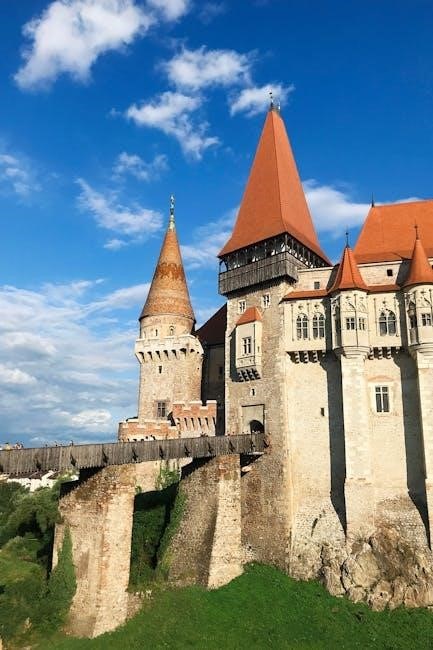
The strategic placement of these fortresses, as illustrated in historical maps within PDF documents, enabled rapid response to threats and facilitated communication. Castles like Krak des Chevaliers and Margat al-Qala’a served as anchors for Crusader holdings. PDF studies emphasize that the cost of constructing and maintaining these castles was immense, requiring significant resources and manpower. Ultimately, the castles’ effectiveness in sustaining Crusader control was limited by their vulnerability to sustained sieges and internal political fragmentation, as detailed in comprehensive PDF reports.
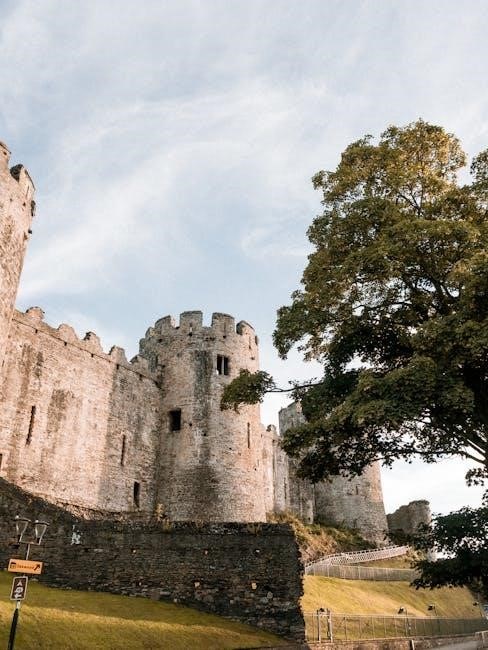
The Impact of the Crusades on Castle Design
Crusades spurred castle evolution; Eastern fortifications influenced European designs, documented in “Castles and Crusades” PDF materials, ultimately leading to their eventual decline.
Adoption of Eastern Fortification Techniques
The Crusades facilitated a significant exchange of military knowledge between Europe and the Middle East, profoundly impacting castle design. European crusaders encountered sophisticated fortification systems in the Levant, particularly those built by Muslims and Byzantines, which differed markedly from earlier European models. These Eastern designs emphasized concentric defenses – multiple layers of walls – a feature largely absent in earlier European castles.
Crusaders observed and subsequently adopted elements like round towers, which offered superior resistance to siege weaponry compared to the square keeps common in Europe. They also incorporated machicolations – projecting galleries with openings in the floor – for more effective defense. Detailed analyses within “Castles and Crusades” PDF resources illustrate how these techniques were integrated into Crusader castles in the Holy Land, and then gradually disseminated back to Europe, influencing subsequent castle construction throughout the continent. This cross-cultural exchange fundamentally altered the landscape of medieval fortifications.
Influence on European Castle Architecture
The return of crusaders to Europe brought with them not only battle experience but also a wealth of architectural knowledge gleaned from the East. This directly influenced European castle architecture, moving away from earlier, simpler designs. The adoption of concentric castle layouts, initially observed in Eastern fortifications, became increasingly prevalent, offering multiple layers of defense. Round towers, superior to square keeps in resisting siege attacks, began to replace older designs.
Further innovations, like machicolations and improved gatehouse defenses, were also integrated. “Castles and Crusades” PDF documents detail how these changes manifested across Europe, with regional variations reflecting local resources and strategic needs. The increased emphasis on defense, spurred by the experiences of the Crusades, led to the construction of more formidable and complex castles, fundamentally reshaping the medieval landscape and military strategy.
The Decline of Castle Importance
By the late medieval period, several factors contributed to the diminishing strategic importance of castles. The advent of gunpowder and increasingly powerful artillery rendered traditional castle defenses vulnerable. Cannons could breach stone walls with relative ease, negating the advantages of height and thickness. Simultaneously, centralized monarchies emerged, reducing the power of feudal lords who traditionally controlled castles.
“Castles and Crusades” PDF resources illustrate how castles transitioned from military strongholds to symbols of status and administrative centers. The cost of maintaining and upgrading castles to withstand new weaponry became prohibitive. Furthermore, changes in warfare tactics favored larger, professional armies over localized castle-based defense. While castles continued to be built, their primary function shifted, marking the end of their dominance as essential military structures.
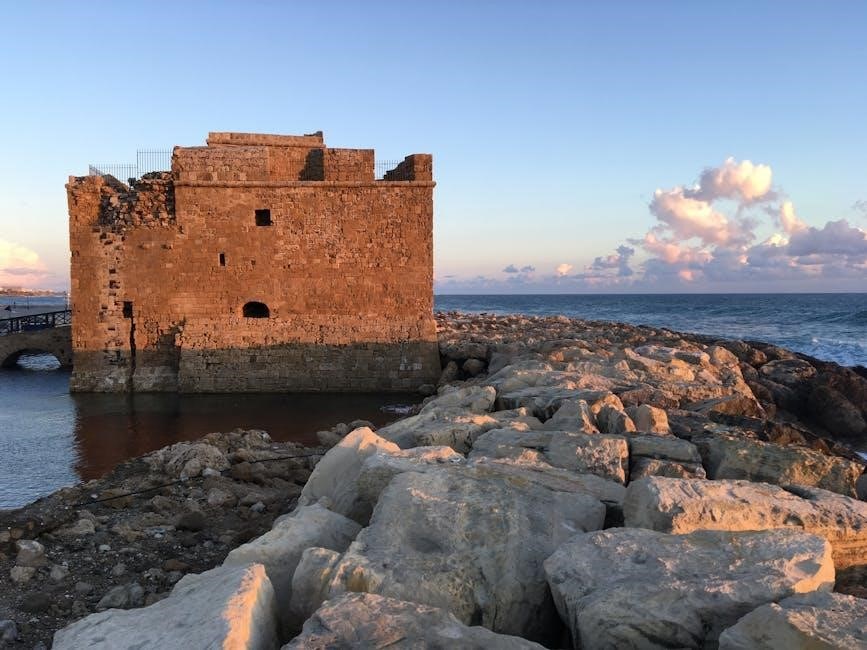
Resources for Further Study: “Castles and Crusades” PDF Materials
Numerous “Castles and Crusades” PDF documents, academic articles, and research papers are readily available online, offering in-depth exploration of this fascinating period.
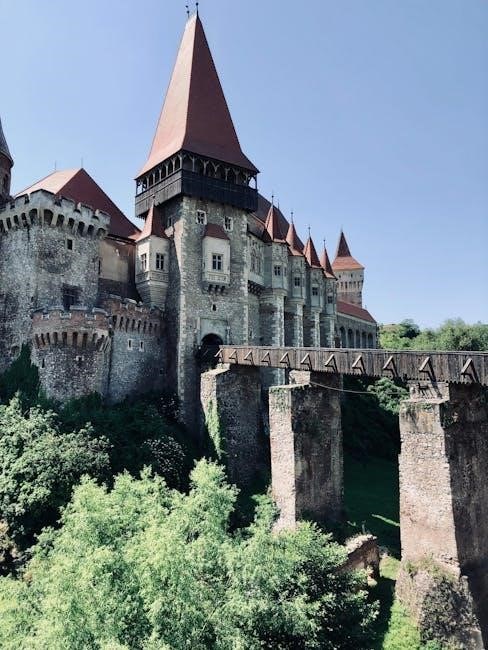
Availability of Online PDFs
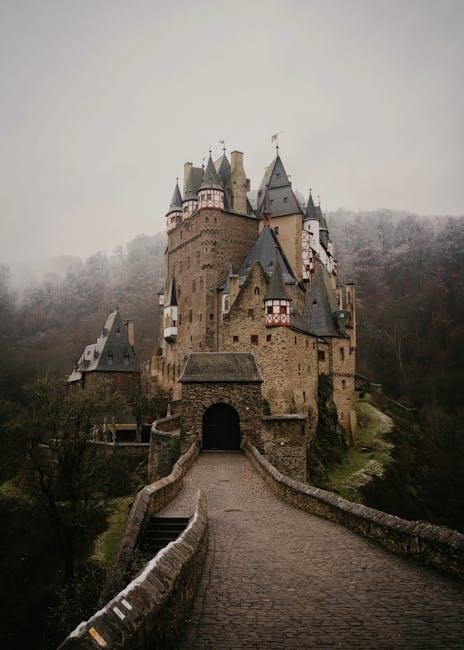
A wealth of information concerning castles and the Crusades is accessible through freely available PDF documents online. These resources range from comprehensive historical overviews to focused studies on specific castles, Crusader states, or military tactics. Many university libraries and academic institutions offer digitized collections, making scholarly articles and research papers easily downloadable in PDF format.
Furthermore, dedicated historical websites and online archives frequently host digitized versions of primary source materials, such as chronicles and maps, also available as PDFs. Searching using keywords like “castles and Crusades PDF,” “Crusader castle architecture PDF,” or specific castle names (e.g., “Krak des Chevaliers PDF”) will yield numerous results. However, it’s crucial to evaluate the source’s credibility before relying on the information presented within these PDFs, ensuring academic rigor and historical accuracy.
Academic Articles and Research Papers
Digging deeper into the study of castles and the Crusades requires exploring peer-reviewed academic articles and research papers, often available as PDFs through scholarly databases. Platforms like JSTOR, Academia.edu, and university library repositories provide access to in-depth analyses of castle architecture, Crusader motivations, and the socio-political impacts of the era.
These PDFs frequently present original research, detailed archaeological findings, and nuanced interpretations of historical events. Searching for specific topics – such as “CosmWasm performance WASM VMs PDF” alongside “Crusader fortifications” or “castle siege warfare” – can uncover specialized studies. Remember to critically assess the author’s credentials and the publication’s reputation to ensure the research is reliable and contributes meaningfully to the understanding of castles and the Crusades. Utilizing these resources elevates research beyond general overviews.